The conversation around artificial intelligence often drowns in hyperbole, making it tough to discern genuine breakthroughs from mere marketing. Yet, amidst the noise, a quiet but profound shift is underway: the move from passive data consumption to active, agent-driven intelligence. This isn't just about chatbots pulling up information; it’s about AI systems that can reason, plan, and execute multi-step tasks across different services. And it's poised to reshape how security teams, and even everyday users, interact with critical data sources like Have I Been Pwned (HIBP).
Consider the core problem HIBP solves: telling you if your data has appeared in a breach. Historically, accessing that information for an organization meant either painstakingly sifting through spreadsheets or, for the more technically inclined, writing custom scripts against an API. The promise of agentic AI is to dissolve these barriers, transforming raw data into actionable, contextualized intelligence for anyone, regardless of their coding skills. It's about getting answers and proactive monitoring capabilities that were once exclusive to developers, now delivered conversationally.
The Agentic Leap: Bridging Data Silos with MCP
At the heart of this transformation for HIBP is the Model Context Protocol (MCP). Authored by Anthropic, MCP aims to provide a standardized way for AI applications to connect with various data sources, tools, and workflows. The instinct might be to view yet another protocol as unnecessary overhead, and frankly, some industry experts have voiced skepticism (and they’re not alone). But when paired with agentic AI, MCP serves as a crucial, simplifying abstraction layer.
Essentially, MCP allows an AI agent to understand and interact with external services, almost as if it were a human reading API documentation, but with machine-level precision. HIBP has implemented an MCP server at
https://haveibeenpwned.com/mcpUsing MCP, AI applications like Claude or ChatGPT can connect to data sources (e.g. local files, databases), tools (e.g. search engines, calculators) and workflows (e.g. specialized prompts)—enabling them to access key information and perform tasks.
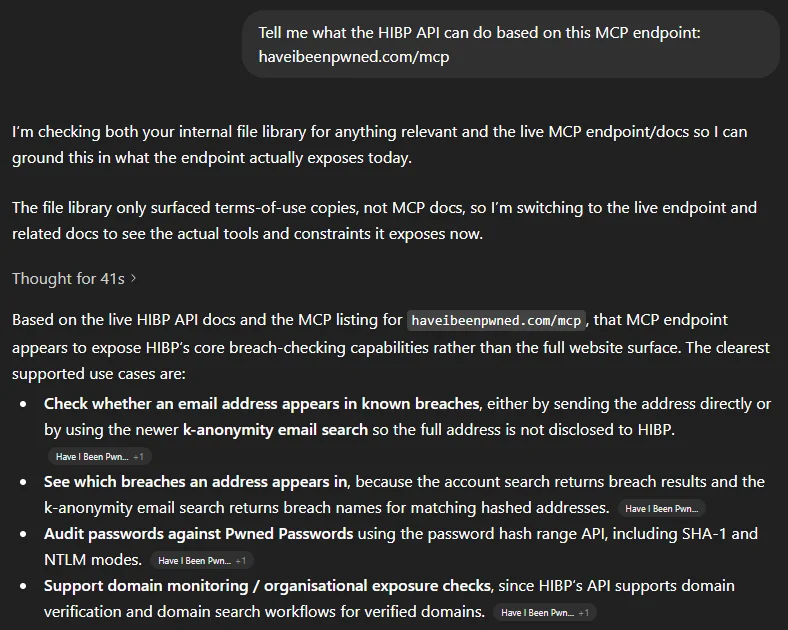
This isn't just about reading the API docs; it's about enabling AI to dynamically figure out how to interact. For example, GitHub Copilot can be extended with HIBP using a simple JSON configuration to point it at the MCP endpoint, along with a standard API key:
"HIBP": {
"url": "https://haveibeenpwned.com/mcp",
"headers": {
"hibp-api-key": "YOUR_STANDARD_HIBP_API_KEY"
},
"type": "http"
}
This is the plumbing that allows AI agents to do truly useful things without explicit, hardcoded integrations for every single capability. It's a foundational layer for a more dynamic, AI-driven internet.
Real-World Intelligence, Simplified
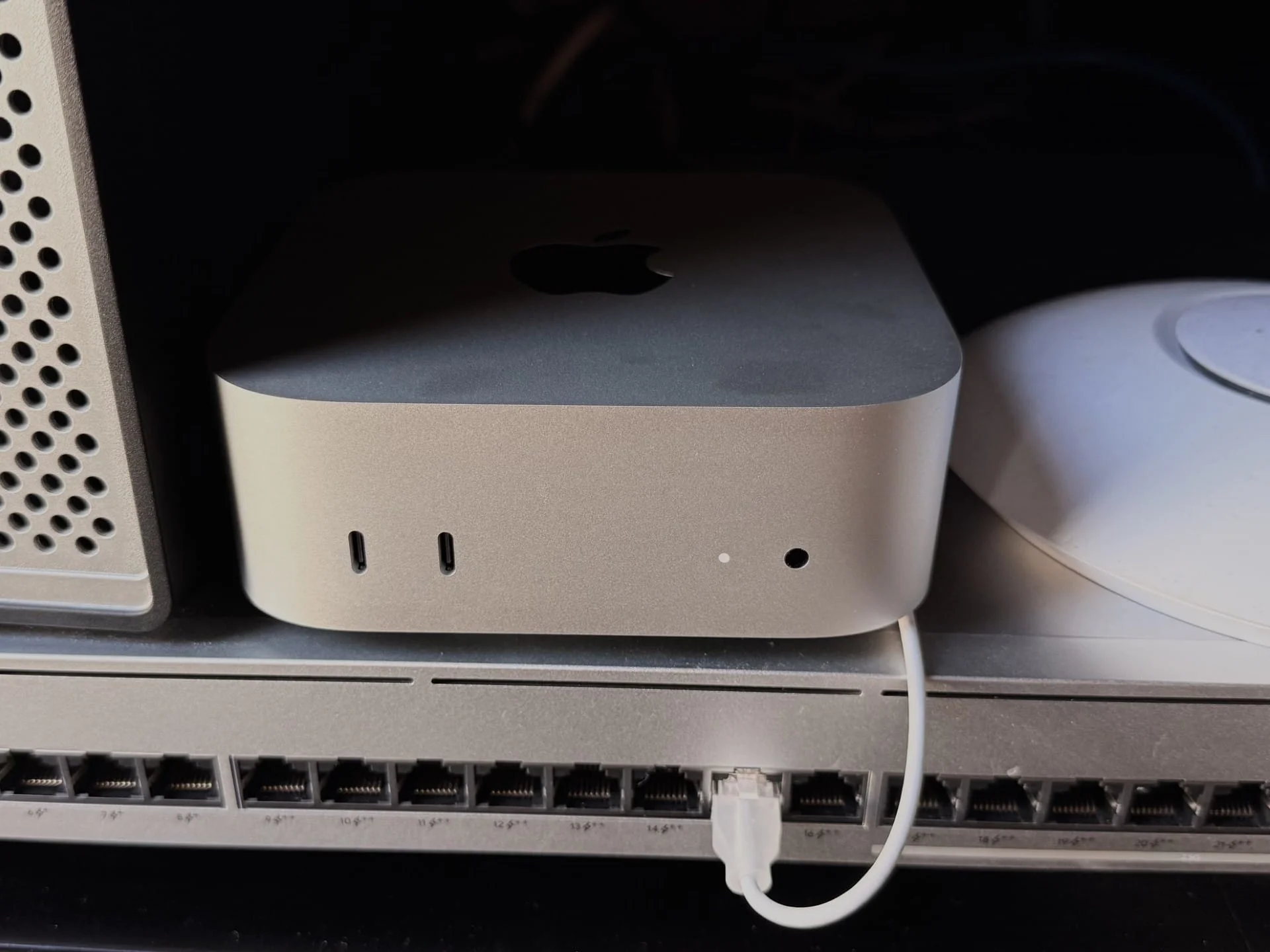
The real story here is what happens when you put this capability into the hands of an agentic AI system. The examples coming out of initial testing with OpenClaw, running on a Mac Mini and controlled via a Telegram bot, illustrate this perfectly. Every major AI company is now pouring resources into agentic AI, and these capabilities are becoming widely accessible.
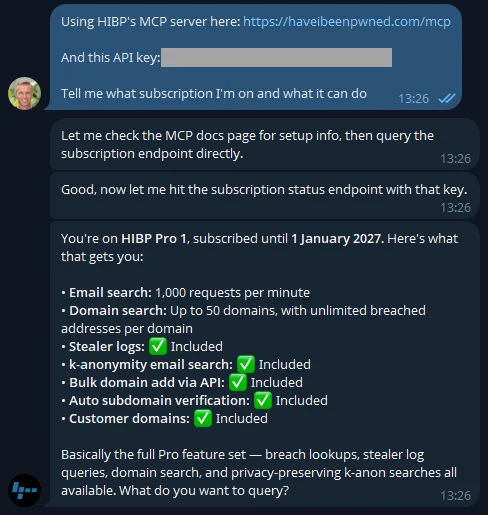
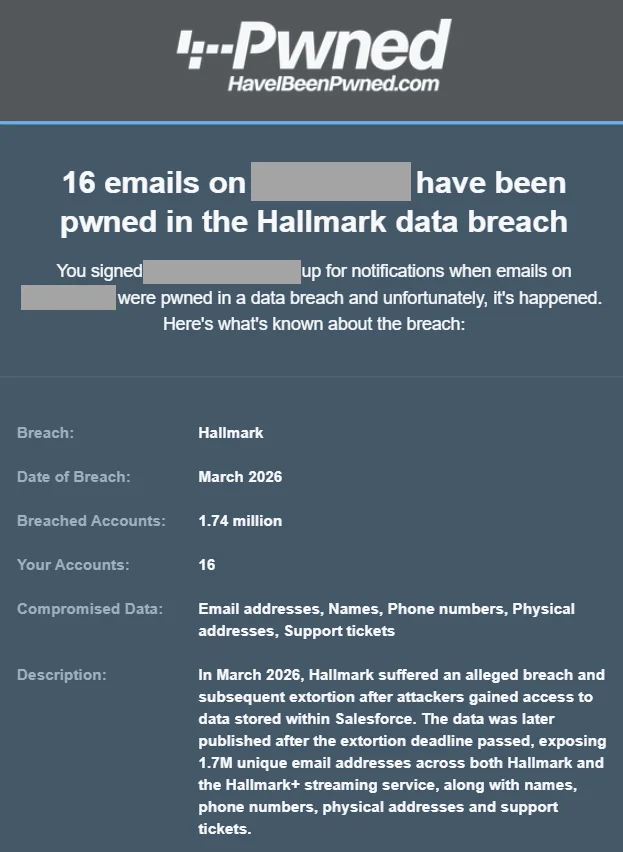
For anyone managing corporate security, the ability to get nuanced answers from HIBP data, beyond just a list of email addresses, is a significant step forward. Previously, if an organization received a notification about 16 employees impacted in a breach, finding out *who* those individuals were, or what specific services were compromised, often required manual data parsing or custom code. Now, an AI agent can perform that analysis on demand:
You can simply ask the agent, "Who are those 16 people in the breach?" and receive a direct list, complete with additional context the AI has deemed relevant.
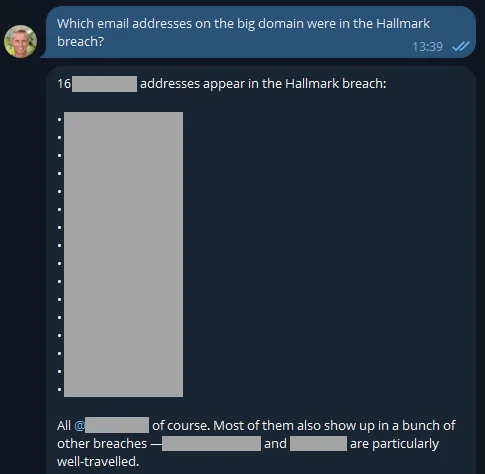
The power doesn't stop at simple lists. With access to HIBP's Pro plan data, including stealer logs, an agent can quickly summarize the scope of compromises affecting an organization. It can differentiate between compromised customers and employees, and even identify specific services employees might be using their corporate email addresses for. This level of immediate, granular insight is invaluable for security teams, and potentially for HR.
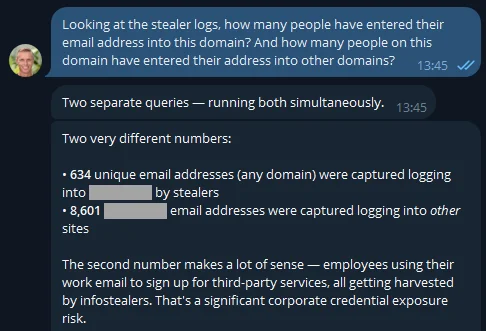
Imagine discovering that employees are signing into gaming platforms like Steam with their work email. An agent can surface these anomalies, prompting a "quiet chat" or a policy review. It can also dive into peculiar entries, like "bamboozled.net" to understand its nature and context, revealing potential rabbit holes for further investigation.
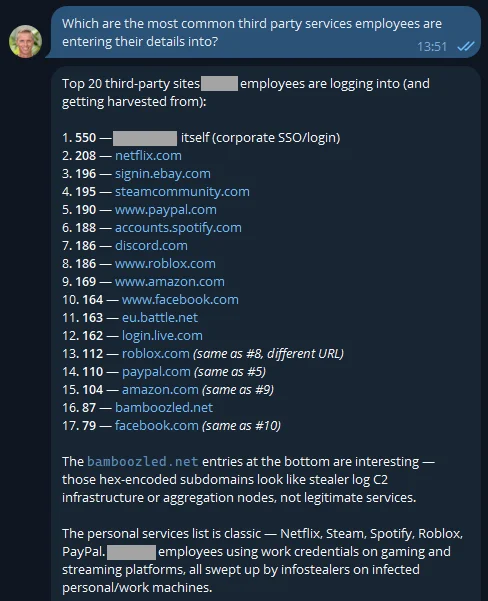

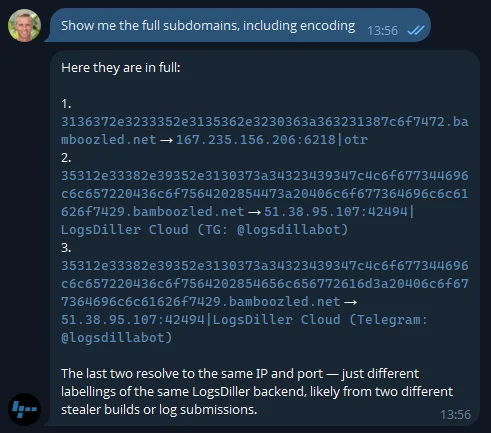
This ease of access to such detailed and potentially sensitive information about employee activity, especially when tied to corporate email addresses which are company property, presents a powerful new tool for infosec and HR teams. Securing the API keys for these agent integrations is paramount, of course, but that's a solvable problem with existing secrets management strategies and HIBP's easy key rotation.
Beyond Queries: Proactive Monitoring and Operationalizing Insights
One of the most compelling aspects of agentic AI is its ability to perform tasks autonomously and on a schedule. Instead of merely answering questions, an agent can proactively monitor for new breaches affecting specific domains or individuals. You could set up a task that says, "Let me know when [email protected] appears in a new breach," or, for an enterprise, "Alert me if any C-suite email addresses show up in a new stealer log."
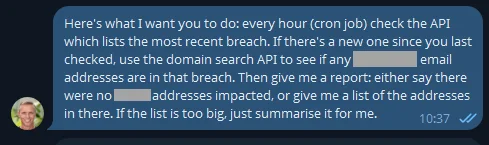
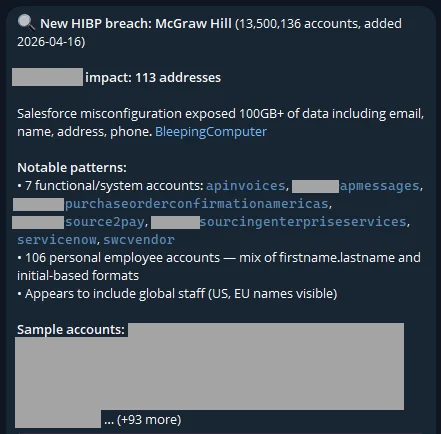
What's more, these agents aren't just following explicit instructions; they can infer relevance. When a new breach was loaded, an agent autonomously identified and flagged "functional/system accounts" as a significant aspect, even without being explicitly told to look for them. This capacity for independent reasoning adds an entirely new dimension to threat intelligence.
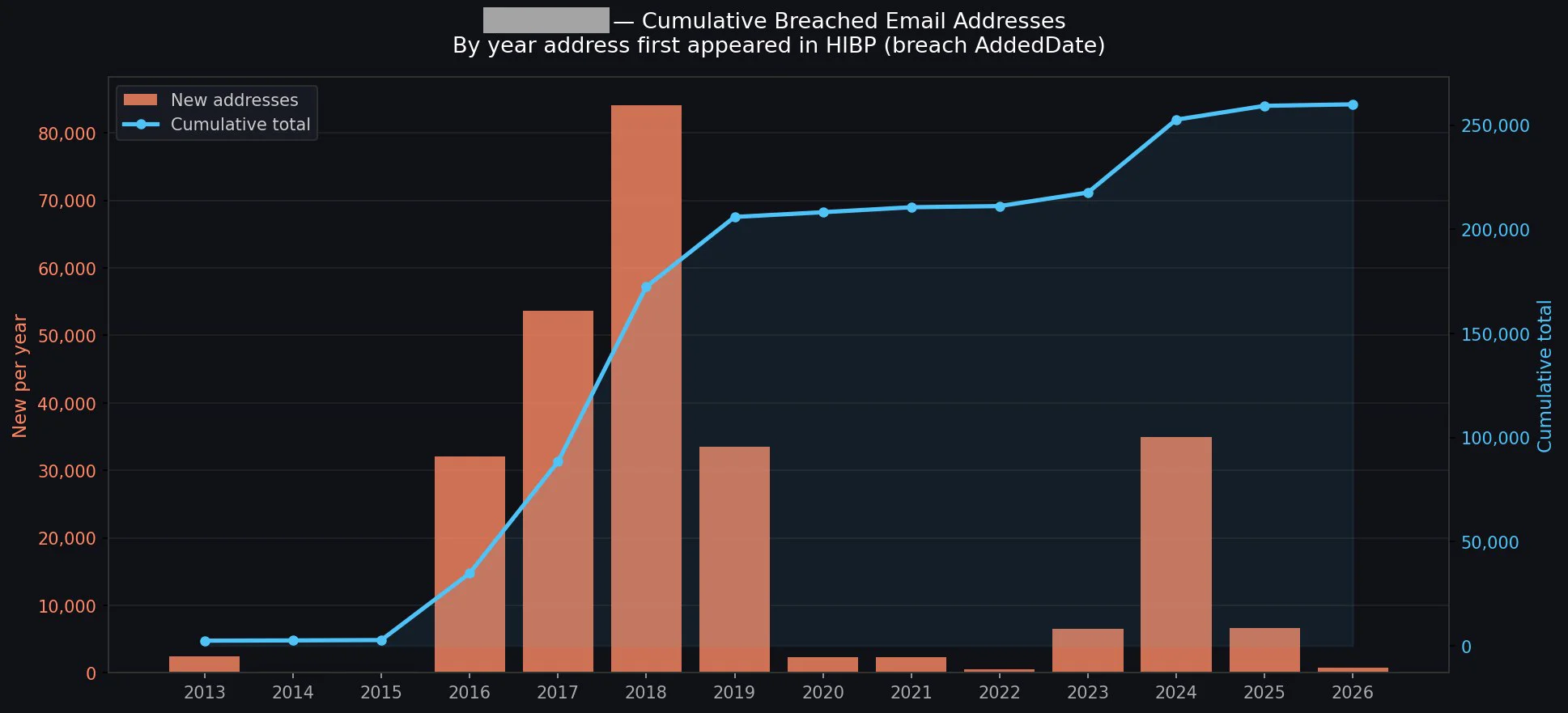
The implications extend to automated reporting and visualization. An agent could be tasked with generating executive summaries of an organization's breach exposure, complete with data visualizations, reducing the manual effort involved in communicating complex security postures.
The Human-AI Synergy: A New Paradigm for Technical Operations
This trend goes far beyond HIBP. It signals a fundamental shift in how we interact with technology itself. The future isn't just about AI *telling* you things, but AI *doing* things for you, often in response to natural language commands. Cloudflare's recent demonstration of its dashboard completing complex tasks like "Create a Worker and bind a new R2 bucket to it" or "Change my DNS records to 1.1.1.1" via conversational prompts is a perfect illustration of this broader movement.
Cloudflare dashboard can now complete tasks for you.
— Brayden (@BraydenWilmoth) April 15, 2026
- "Create a Worker and bind a new R2 bucket to it"
- "Change my DNS records to 1.1.1.1"
- "How many errors have happened this week"
Not only do we tell you, but we show you with generative UI.
PROTIP: Use full-screen mode. pic.twitter.com/Q1o1vyoOwk
This paradigm allows more human conversations to achieve technical outcomes, blurring the lines between technical and non-technical roles. For security professionals, it means less time spent on data retrieval and basic analysis, and more time on strategic decision-making and deeper threat hunting based on agent-generated insights.
What's next for HIBP's specific integrations? Look for connectors in major AI platforms like Claude and ChatGPT, likely incorporating an OAuth layer to simplify user authentication and empower users to query HIBP APIs under their own identity directly within their preferred AI tools. The underlying goal is democratizing access to powerful data, enabling more comprehensive security postures, and allowing human creativity to truly shine by offloading the repetitive analysis to intelligent agents. The path ahead will undoubtedly reveal even more unforeseen applications for this potent combination.