AI's role in the hiring process continues to be a hot topic, particularly when it comes to interview evaluation. So, when a piece surfaces that attempts to demystify the technical architecture behind these AI scoring systems, it immediately grabs your attention. We're looking at "Architecting the Score: The Tech Behind AI Interview Evaluation," penned by
jelena3 and published on
SitePoint as part of their AI category on April 8, 2026.
Here's the thing: this isn't a typical editor-reviewed analysis. The platform labels it clearly as a "Community Article," meaning it's user-generated content that SitePoint hasn't formally vetted. That's a crucial bit of context. It suggests we're getting an insider's perspective, perhaps an engineer or developer's direct take, rather than a polished editorial stance. That said, the article's proposed structure promises a detailed look into how one might build increasingly sophisticated AI models for what is, let's be honest, a notoriously subjective task.
From Script-Followers to Stress Tests
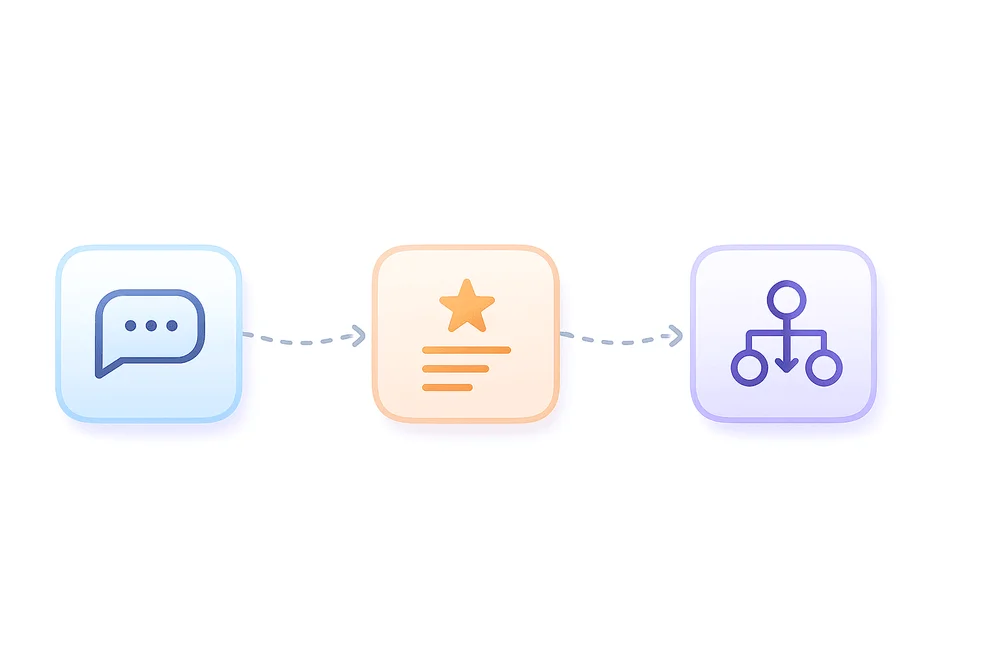
The article lays out a progression of AI approaches, starting with the most basic and escalating to what sounds like a genuinely advanced, almost combative, system. It's a journey from simple automation to something far more complex.
First up, there's "The Simple Bot: Sticking to the Script." This initial section, which includes a "How It Works" deep dive, likely details an AI that follows predefined rules or keyword matching. It sounds like a basic filtering mechanism. The follow-up question, "Why We Need More," immediately signals that this rudimentary approach is, predictably, insufficient for the complexities of human interaction.
Then, the article moves to "The Smart Filter: Baking in the Culture." This is where things get more interesting and, frankly, more controversial. This filter apparently uses "Probability Modeling" to evaluate candidates. The included "Case Study: Building a Fit Detector" hints at an attempt to automate cultural alignment—a laudable goal, perhaps, but also one fraught with potential for bias. What this means for you, if you're deploying these tools, is that the article promises to unpack how such a system might be constructed, but also identifies "The Catch." That 'catch' is the part I'm most eager to read, as it's almost certainly about the inherent challenges or ethical dilemmas of codifying culture.
Finally, we hit what the author calls "The Adversarial Prober: The Ultimate Stress Test." This is where the concept of AI for interview evaluation takes a sharp turn into advanced AI design. This section describes a system where "Two LLMs, One Goal" are at play, implying one AI challenges the other, or perhaps one simulates the candidate while the other evaluates. The idea of a "Dynamic Feedback Loop" suggests continuous improvement and refinement. But here’s the critical question posed by the author themselves: "Is This Too Much?" It's a fair query. Pitting AIs against each other for human evaluation sounds both fascinating from a technical standpoint and potentially dystopian from a human resources perspective.
Ultimately, the piece wraps up with "The Takeaway: It's All About Intent." This suggests the author believes the *purpose* behind the AI's design and deployment is paramount, regardless of its sophistication. It's a sentiment many in the industry echo, especially as AI permeates more sensitive domains like talent acquisition. The article, despite its community origins, appears to offer a valuable, structured look at the technical layers beneath AI-driven hiring decisions.The world of recruitment and education has been fundamentally reshaped by artificial intelligence, and it happened faster than many expected. Forget projections about the future; we're living the reality where up to
87% of companies now integrate some form of AI into their hiring processes. This means a substantial portion of applications gets screened by machines before a human ever lays eyes on them.
But here’s the rub: filtering resumes for keywords is the easy bit. The true architectural hurdle lies in measuring the intangible, subjective human elements—things like genuine cultural fit or alignment with an institution's mission. A basic Large Language Model (LLM) can certainly fire off behavioral questions, but how can it truly discern if a candidate genuinely cares about a university’s commitment to community health in a rural area, or if they're simply skilled at deploying buzzwords?
To tackle this, developers are moving beyond simple scripts. They're constructing specialized, layered AI systems. We're going to pull back the curtain on three primary architectural models currently driving AI interview platforms, illustrating their evolution from superficial Q&A to sophisticated evaluation.
The Scripted Starter: Limitations of the Simple Bot
The first generation of AI interviewers is, frankly, a bit rudimentary. Picture a "basic starter-kit" bot: it's the quickest way to get an automated interview system online, but its capabilities are remarkably limited. This architecture operates on pure **Protocol Matching**, meaning it's tied to a rigid, predetermined list of questions—perhaps five behavioral, three situational—which it must ask in a fixed sequence. The underlying Large Language Model (
LLM) here isn't performing much deep analysis; it primarily functions as a digital recorder, counting keywords. Did you utter "teamwork"? Check. Did your tone generally lean positive? Check. That's about the extent of its sophisticated judgment.

The appeal is obvious: it’s cheap and straightforward to deploy. But its value in assessing true fit or genuine experience is minimal. If the bot asks, "Tell me about a time you showed leadership," and you deliver a perfectly polished, generic answer, the Simple Bot will accept it and move on. It lacks the capacity to deviate from its script, to challenge your responses, or to differentiate between a canned anecdote and authentic experience. Nuance, in this model, is simply missed. It's a prime example of an easily gameable system.
Beyond Keywords: The Smart Filter's Organizational Lens
This is where things start getting genuinely interesting. Recognizing the shortcomings of generic LLMs, developers introduced a **custom filter layer** positioned directly atop the core AI. Think of it less as a general-purpose tool and more as a specialized instrument, precisely calibrated for a specific task.
This architecture employs **Probability Modeling**. Instead of just pulling from a general question bank, it leverages a comprehensive database of values unique to the organization. If the goal is to find a candidate for a specific engineering firm or a particular graduate program, this database would be packed with keywords and mission points central to that institution’s identity—whether it’s a strong commitment to sustainability, focus on niche research, or dedication to regional community engagement.
When the AI generates a question or evaluates a candidate's response, this custom filter applies a weighting system. For example, a question about "generic career goals" receives a low priority. Conversely, prompting with "how your work will directly address our company's primary values" gets a much higher weight. Similarly, if a candidate discusses "innovative material science" coupled with "local educational outreach" in response to a prompt from a community-focused engineering firm, that answer gets a significantly higher score than vague mentions of "general science."

We see systems like
Confetto employing this very model. They aren't just issuing a broad instruction to "Be an interviewer." Instead, they appear to be architecting structures that can interpret specific admissions committee rubrics. It's highly probable they dynamically swap the central "evaluator persona" based on the target school or institution. When a system prepares candidates for a specific school, for instance, it must weigh responses against a rubric that heavily prioritizes **institutional core values** and **regional context**—say, current local community challenges relevant to the organization’s mission. From an engineering standpoint, this isn't just about coding; it demands meticulous management of vast datasets reflecting evolving institutional values.
Here's the catch, though: this system is inherently beholden to the quality of its underlying data. If a school’s mission shifts, or if the data isn't rigorously maintained, the AI risks asking questions that are either outdated or simply irrelevant. It presents a constant synchronization challenge for the data engineers.
The Ultimate Test: The Adversarial Prober's Dynamic Interrogation
So, you want to know if someone's actually faking it? Imagine an expert observing a candidate and then immediately pouncing on any weak points. That's the core idea behind the most advanced AI architecture currently being deployed: **Dynamic Persona Modeling**.
This isn't a single AI; it’s typically **two distinct Large Language Model agents** collaborating, each with a specific role:
| Agent | Role | Focus |
| :-------------------------- | :--------- | :---------------------------------------------------------------- |
| **LLM Agent 1 (The Interviewer)** | Talker | Maintains conversational flow, generates follow-up questions. |
| **LLM Agent 2 (The Evaluator)** | Critic | Holds the secret rulebook, scores every word for true mission fit. |
The brilliance here lies in the **dynamic feedback loop**. When a candidate responds, Agent 2, the Critic, instantly assesses that response for consistency and depth against its hidden criteria. Say you declare, "I care deeply about social justice." Agent 2, the skeptic, immediately processes this. It might internally question: "Is that a nice keyword, or does the answer provide enough depth to prove it?" If Agent 2 determines your answer was too vague or superficial, it sends an immediate signal to Agent 1, the Interviewer, to **pivot the conversation without delay**. Agent 1 might then follow up with something pointed, like: "Could you name three specific local programs tackling that issue, and how would you personally contribute?"
This aggressive, real-time probing makes it incredibly difficult for candidates to rely on pre-rehearsed, canned answers. It’s designed to mimic a truly savvy and skeptical human interviewer, one who knows precisely where and how to apply pressure.
Yet, this level of sophistication doesn't come cheap. This architecture is **computationally expensive** and presents significant engineering complexities. The main challenge? Meticulously managing the interplay between the two agents to avoid repetitive questioning or "interview drift," all while ensuring the conversational path remains laser-focused on the institution's core evaluation criteria. It raises a valid question: Is this degree of intensity truly necessary, or does it risk becoming counterproductive?
The Future of Evaluation: Intent and Architectural Ingenuity
What’s clear from all this is that the next time you encounter an AI interviewer, you’re not just talking to a chatbot. You're facing a system whose developers are actively, and quite aggressively, designing ways to bypass your ability to game it.
The overarching trend here is undeniable: AI systems are rapidly evolving from general conversational interfaces to highly **deep, domain-specific intelligence**. This isn't just about iterating on an algorithm; it's about a fundamental shift in architectural philosophy. The future of interviewing won't merely hinge on *what* questions an AI asks, but rather on the specific, often intricate, architectural models that engineers embed within the machine. These models are designed to truly measure *you*—your intent, your alignment, and your authentic self, not just your ability to recall keywords. For anyone in talent acquisition or education, understanding these underlying designs isn't just academic; it's becoming critical to both finding the right people and building truly fair and effective screening processes.